Tractor Tire Costs: What Impacts Price and Long-Term Value?
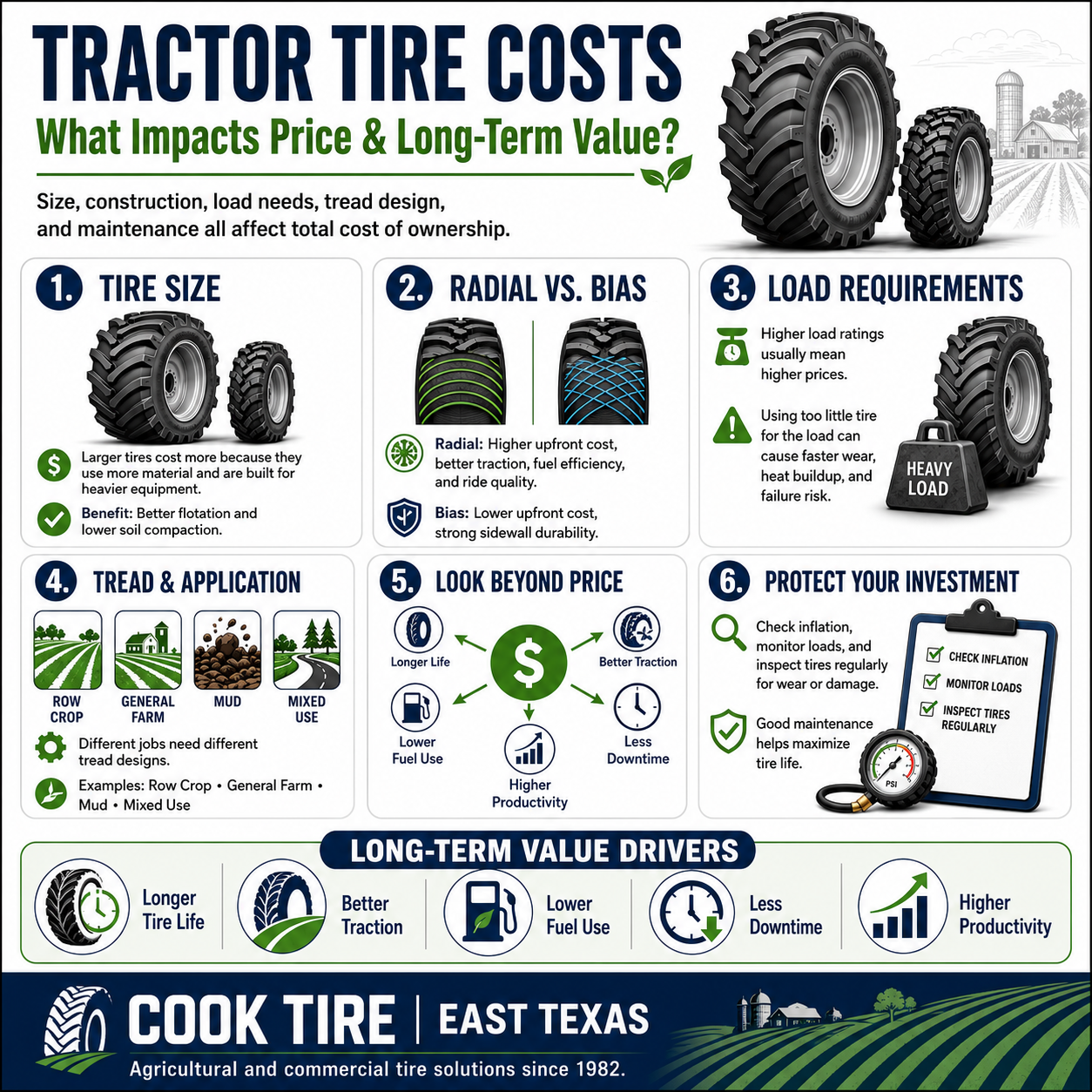
Tractor Tire Costs: What Impacts Price and Long-Term Value?
When it’s time to replace tractor tires, one of the first questions operators ask is simple: How much do tractor tires cost? The answer is not always straightforward.
Tractor tire pricing can vary significantly depending on the equipment, tire size, construction type, load requirements, and operating conditions. While some agricultural tires may cost a few hundred dollars each, larger specialty tires for high-horsepower equipment can cost several thousand dollars per tire.
For farmers and agricultural operations, focusing only on purchase price can be expensive in the long run. The right tire can improve traction, reduce fuel consumption, minimize soil compaction, and deliver years of reliable performance. The wrong tire can lead to premature wear, increased downtime, and higher operating costs.
Understanding what drives tractor and commercial tire costs can help you make a more informed investment and maximize the value of every dollar spent.
Average Tractor Tire Cost Ranges
Tractor tires come in a wide range of sizes and applications, making pricing highly dependent on the equipment involved. Smaller utility tractors typically require less expensive tires than row crop tractors, sprayers, combines, or high-horsepower agricultural equipment. Tire prices often increase as dimensions, load capacity, and performance requirements increase.
Factors that commonly affect tractor tire pricing include:
- Tire diameter and width
- Load carrying capacity
- Ply rating
- Radial or bias construction
- Tread design
- Brand and product line
- Agricultural application requirements
- Specialty features for specific field conditions
Two tractor tires with nearly identical dimensions may have very different price points based on how they are built and what they are designed to accomplish.
Tire Size Has a Major Impact on Cost
One of the biggest drivers of tractor tire pricing is size. Larger tires require more materials, more complex manufacturing processes, and are often designed to carry heavier loads. Equipment used for row crop farming, harvesting, spraying, or heavy tillage typically requires larger tires capable of handling demanding field conditions.
As tire size increases, so does the investment. However, larger tires often provide benefits that extend beyond simple load carrying capacity, including improved flotation, reduced soil compaction, and better traction under challenging conditions.
Choosing a tire solely because it costs less can create performance limitations that affect productivity throughout the season.
Radial vs. Bias Construction
The construction method also plays a significant role in pricing.
Radial Tires
Radial tractor tires are generally more expensive upfront, but they often deliver better long-term value. Benefits of radial tires include:
- Improved traction
- Better fuel efficiency
- Reduced soil compaction
- Longer tread life
- More consistent ground contact
- Improved ride quality
Because radial tires flex differently than bias tires, they often provide a larger footprint and distribute weight more evenly across the field.
Bias Tires
Bias tires are typically less expensive initially and can perform well in certain applications. Advantages include:
- Lower purchase cost
- Strong sidewall durability
- Suitable for certain utility and agricultural applications
However, bias tires may not offer the same ride quality, fuel efficiency, or tread life as comparable radial models. For many agricultural operations, the higher upfront investment of radial tires can be offset through improved performance and lower operating costs over time.
Load Requirements Affect Tractor Tire Pricing
Load capacity is another critical factor. Modern agricultural equipment continues to grow larger and heavier. Tires must be capable of supporting both equipment weight and working loads without excessive stress or deformation.
Higher load-rated tires typically cost more because they are built with stronger materials and more advanced construction methods.
Selecting an undersized tire to save money often results in:
- Accelerated wear
- Reduced tire life
- Increased heat buildup
- Greater risk of tire failure
- Reduced operational efficiency
Matching load requirements to the correct tire specification is essential for both performance and safety.
Tread Design and Application Matter
Not all tractor tires are designed for the same type of work. Field conditions, crop types, terrain, and operating environments all influence the best tire choice. For example:
- Row crop applications may require narrow tires designed to minimize crop damage.
- General farming operations often benefit from versatile agricultural tread patterns.
- Muddy conditions may require aggressive lug designs for maximum traction.
- Industrial and mixed-use applications may need specialized tread patterns for durability on hard surfaces.
More specialized tread designs often come with a higher price tag, but they can significantly improve performance and productivity in the right environment.
Looking Beyond the Purchase Price
One of the biggest mistakes operators make is evaluating tractor tires solely by initial cost. The true value of a tire is determined by what it costs over its entire service life.
A less expensive tire that wears out quickly may ultimately cost more than a premium tire that lasts several additional seasons. Long-term value should include:
- Tire lifespan
- Fuel efficiency
- Traction performance
- Downtime reduction
- Maintenance costs
- Productivity gains
A tire that improves field performance while reducing operating costs often delivers a much stronger return on investment than the lowest-priced option available.
Maximizing Tire Life and Protecting Your Investment
Proper tire maintenance plays a major role in reducing long-term operating costs. Even the highest-quality agricultural tire can experience premature wear if it is not properly maintained.
Some of the most effective ways to extend tire life include:
- Maintain Proper Inflation
- Incorrect tire pressure is one of the leading causes of premature tire wear.
- Overinflation can reduce traction and increase center tread wear. Underinflation can create excessive heat buildup and sidewall stress.
- Regular pressure checks help maximize performance and tire longevity.
- Monitor Load Distribution
Overloading equipment places unnecessary stress on tires and can significantly shorten service life. Following manufacturer load recommendations helps protect both the tire and the equipment.
Perform Routine Tire Inspections
Regular inspections can identify issues before they become expensive failures. Look for:
- Uneven wear patterns
- Sidewall damage
- Cuts and punctures
- Stubble damage
- Inflation issues
Early detection often prevents costly downtime during critical operating periods.
Professional Recommendations Matter
Choosing the right agricultural tire involves more than comparing prices online. While it’s easy to shop tractor tires online, selecting the best tire for your operation requires an understanding of equipment specifications, field conditions, load requirements, and long-term performance goals.
At Cook Tire, our team works with farmers, agricultural operators, and commercial customers throughout East Texas to identify tire solutions that support productivity and reliability. Since 1982, we’ve helped customers evaluate commercial tires based on real-world operating conditions, not just purchase price.
Whether you’re evaluating replacement tractor tires, upgrading agricultural equipment, or researching commercial tires Nacogdoches operators trust for demanding applications, our goal is to help you find the right tire for the job.
The lowest-priced tire is not always the most economical choice. The right tire can improve traction, reduce downtime, increase tire life, and help keep your operation running efficiently season after season.
When evaluating tractor tire costs, focus on the total value the tire delivers, not just the number on the invoice. That approach often leads to better performance, lower operating costs, and greater long-term profitability.