How Long Do Semi Truck and Commercial Tires Last?
If your business depends on trucks, trailers, or fleet vehicles, tire life directly affects operating costs, safety, and downtime. One of the most common questions we hear at Cook Tire is:
How long do semi truck and commercial tires last?
The answer depends on application, maintenance, load conditions, and alignment. Commercial tires are engineered for durability, but how they’re used determines how long they actually perform.
Since 1982, Cook Tire has helped East Texas drivers and fleet operators get the most out of their commercial tires through proper selection, maintenance, and service.
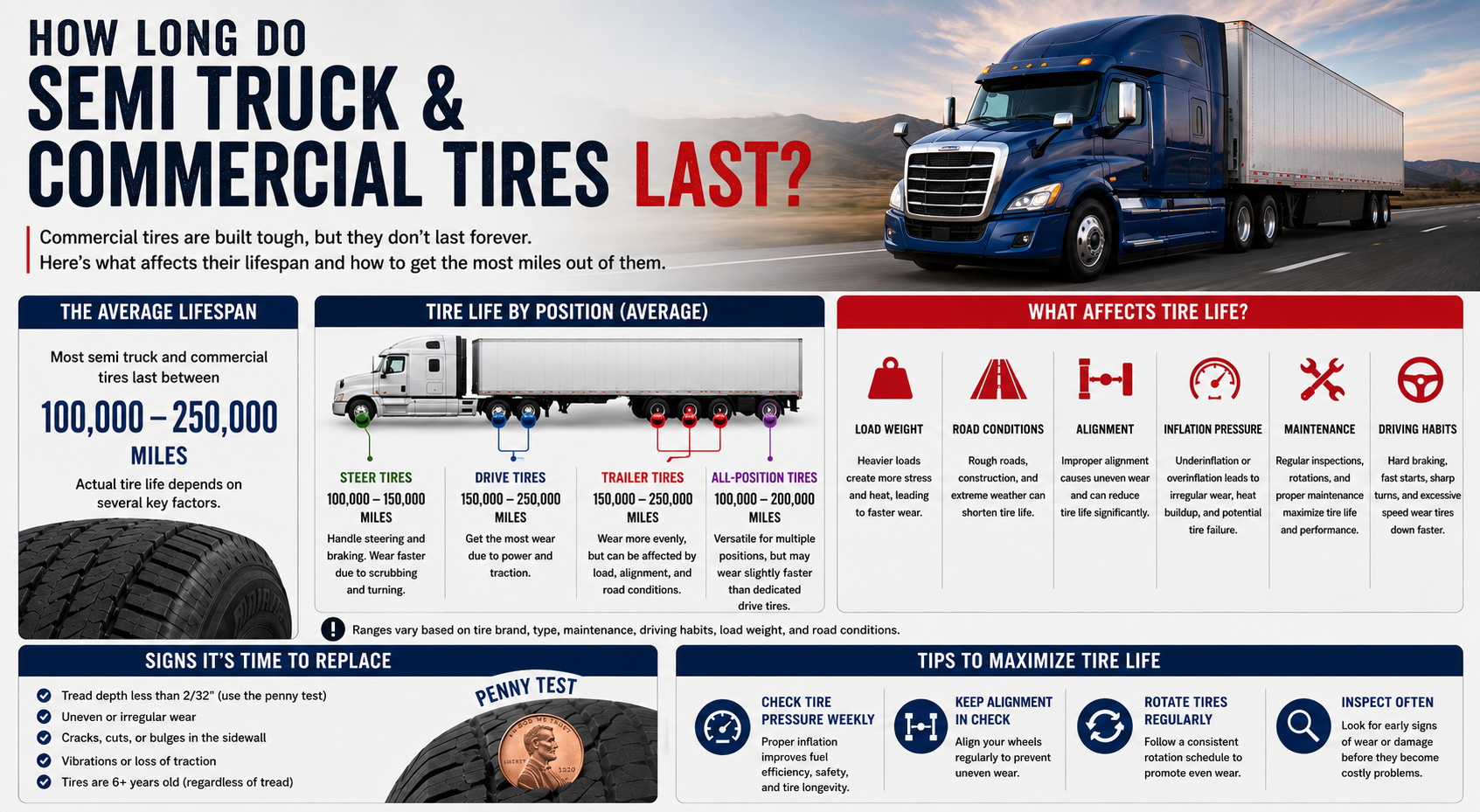
Average Lifespan of Semi Truck Tires
Under normal highway conditions, properly maintained commercial tires typically last:
- Steer tires: 100,000-150,000 miles
- Drive tires: 80,000-120,000 miles
- Trailer tires: 100,000-120,000 miles
- Regional or vocational service: 40,000-80,000 miles
Long-haul highway use generally produces the longest lifespan. Stop-and-go regional routes, construction zones, oilfield work, and heavy-load applications significantly reduce tread life.
Age is also a factor. Even if tread depth remains, most commercial tires should be professionally inspected after five years and replaced by seven years due to rubber aging and structural fatigue.
Steer Tires: Precision and Safety
Steer tires control direction and stability. They are highly sensitive to alignment and suspension conditions.
Premature wear in steer positions is often caused by:
- Incorrect tire pressure
- Improper semi truck alignment
- Worn steering or suspension components
- Uneven loading
Feathered edges, shoulder wear, or cupping are warning signs that something mechanical needs attention. At Cook Tire, our alignment services in Lufkin and Nacogdoches help extend tire life and improve vehicle stability.
Drive Tires: Traction Under Load
Drive tires transfer torque to the road and experience higher stress during acceleration and climbing grades.
Their lifespan depends on:
- Load weight
- Terrain (flat highway vs. hilly routes)
- Driving habits
- Rotation schedules
Consistent rotation and inflation checks dramatically improve performance and longevity.
Trailer Tires: Often Overlooked
Trailer tires absorb significant lateral stress, especially during tight turns. Tandem axles create scrub that accelerates shoulder wear.
Common causes of premature trailer tire failure include:
- Underinflation
- Axle misalignment
- Overloading
- Sidewall damage from curbing
Routine inspections are critical. Trailer positions are frequently neglected until failure occurs.
What Shortens Commercial Tire Life?
Regardless of tire position, these factors reduce lifespan:
- Underinflation: Excess heat buildup damages the casing and reduces retread potential.
- Overloading: Exceeding rated capacity accelerates tread wear and structural fatigue.
- Poor Alignment: Improper semi-truck alignment causes uneven contact with the road and rapid tread wear.
- Inconsistent Maintenance: Failure to rotate, balance, and inspect leads to preventable replacements.
- Harsh Operating Conditions: Rough pavement, job sites, and regional delivery routes shorten tire life compared to interstate driving.
Heat: The Hidden Cause of Commercial Tire Failure
Heat is one of the biggest factors that determines how long semi truck and commercial tires last. Excessive heat buildup weakens the tire casing, accelerates tread wear, and increases the risk of blowouts.
The most common causes of heat-related tire damage include:
- Underinflation
- Overloading
- High-speed highway driving
- Poor alignment
- Heavy stop-and-go operation
In East Texas, high pavement temperatures during summer months place even more stress on commercial tires. A tire operating below the correct PSI generates additional sidewall flex, which creates internal heat and shortens overall tire life significantly.
Proper inflation and regular inspections are critical for controlling operating temperatures and protecting long-term tire durability.
Tire Pressure Monitoring and Inflation Matter More Than Most Drivers Realize
Commercial tire pressure should never be treated as a “set it and forget it” maintenance item. Even small PSI losses can create major long-term wear issues.
Proper tire inflation helps:
- Reduce rolling resistance
- Improve fuel economy
- Prevent uneven tread wear
- Protect casing integrity
- Extend retread potential
Many modern fleets now utilize Tire Pressure Monitoring Systems (TPMS) to track pressure changes in real time. However, physical inspections and cold PSI checks are still essential.
Tires should always be checked when cold, before driving or after sitting for several hours, since heat from operation naturally increases PSI readings.
Mileage Is Not the Only Measure of Tire Condition
Tread depth alone does not determine whether a commercial tire is still safe to operate.
A tire may still show usable tread while suffering from:
- Internal casing fatigue
- Heat-cycle damage
- Sidewall deterioration
- Structural separation
- Dry rot and rubber aging
Commercial tires should be evaluated based on total condition, including wear patterns, age, vibration, casing integrity, and operating history.
Even well-maintained tires should be professionally inspected after five years and closely monitored as they age.
Common Signs of Poor Semi Truck Alignment
Alignment problems are one of the leading causes of premature commercial tire wear.
Signs of improper semi truck alignment include:
- Feathered tread edges
- One-sided shoulder wear
- Steering pull
- Irregular scrub patterns
- Vibration at highway speeds
- Rapid or uneven tread wear
Ignoring alignment problems not only shortens tire life but can also reduce handling stability and fuel efficiency.
Routine alignment service helps commercial tires maintain even road contact and wear patterns throughout their lifespan.
Why Retreading Matters for Commercial Fleets
For many commercial operators, the casing is the most valuable part of the tire.
A properly maintained casing may support multiple retread cycles, dramatically lowering overall cost per mile compared to replacing the entire tire repeatedly.
A typical commercial tire lifecycle may include:
- 100,000+ miles on the original tread
- 80,000-100,000 miles on the first retread
- Additional service life on a second retread
Proper maintenance directly affects whether retreading is possible. Excessive heat buildup, underinflation, impact breaks, and poor alignment can permanently damage the casing and eliminate retread potential.
Fleet operators who prioritize inflation checks, alignment service, and rotation schedules often achieve significantly lower long-term tire costs.
Tire Condition Directly Impacts Fuel Economy
Commercial tires affect more than tread life; they also influence fuel consumption.
Low tire pressure and improper alignment increase rolling resistance, forcing the engine to work harder to maintain speed. Across thousands of highway miles, even small inefficiencies can create substantial fuel costs.
Factors that affect rolling resistance include:
- Tire inflation
- Alignment accuracy
- Tire design
- Load weight
- Tread condition
For fleets operating multiple trucks, maintaining proper tire pressure and alignment can create measurable fuel savings over time.
East Texas Driving Conditions Can Accelerate Tire Wear
Commercial tires in East Texas face unique operating conditions that affect lifespan and performance.
Common regional factors include:
- High summer pavement temperatures
- Rural roads with rough surfaces
- Construction zones
- Heavy rainfall and standing water
- Frequent towing and hauling applications
These conditions place additional stress on tire casings, tread compounds, and suspension systems.
Selecting the correct tire type for your specific operating environment plays a major role in maximizing tire life and maintaining safe performance.
Preventive Tire Maintenance Reduces Downtime
Commercial tire failures rarely happen at convenient times. A roadside blowout can lead to:
- Delayed deliveries
- Missed schedules
- Lost revenue
- Increased labor costs
- Expensive roadside service calls
- Potential cargo damage
Preventive maintenance helps reduce the likelihood of unexpected failures while maximizing tire lifespan.
A proper commercial tire maintenance schedule should include:
- Weekly PSI inspections
- Routine tire rotations
- Alignment inspections
- Balancing service
- Tread depth monitoring
- DOT safety inspections
Consistent maintenance is almost always less expensive than emergency replacement and downtime.
Retreading Commercial Tires: Extending Total Tire Value
Many commercial tires are designed to be retreaded multiple times if the casing remains in good condition.
A typical lifecycle may include:
- 100,000 miles on original tread
- 80,000-100,000 miles on first retread
- Additional service on second retread
Proper maintenance determines whether retreading is possible. Excessive heat damage or impact breaks reduce casing integrity.
At Cook Tire, we help customers evaluate total lifecycle cost, not just the upfront purchase price, when selecting commercial tires.
When Should Commercial Tires Be Replaced?
Replace immediately if you notice:
- Tread depth at or below 4/32″ (steer tires)
- Visible belt exposure
- Sidewall bulges or deep cuts
- Persistent vibration
- Irregular wear patterns
- Dry rot or cracking
Waiting for a roadside failure is far more expensive than proactive service.
Local Support for Commercial Tires in East Texas
For businesses searching for reliable commercial tires in Nacogdoches or Lufkin, working with experienced technicians makes a measurable difference. Proper installation, balancing, rotation schedules, and alignment services all extend tire life and protect your investment.
At Cook Tire, we specialize in:
- Commercial tire sales
- Tire repair and balancing
- Semi truck alignment
- Preventive maintenance inspections
Our technicians take pride in never letting you drive a vehicle we wouldn’t drive ourselves.
The Bottom Line
So, how long do semi truck and commercial tires last?
With proper maintenance and highway use, expect 100,000+ miles in many applications. In demanding regional or heavy-duty service, plan for shorter intervals.
The real variable is not just tire design; it’s maintenance discipline.
Regular inspections, proper inflation, proper alignment, and load management determine whether you reach maximum tire life or replace early.
If your fleet or work truck needs commercial tires, alignment service, or inspection, Book Now or Shop Tires Online with Cook Tire today. Serving Lufkin and Nacogdoches since 1982, we’re committed to keeping East Texas businesses moving safely.